

In the ever-changing landscape of business, knowing where you stand can feel like trying to find your way out of a maze. Enter SWOT analysis, the trusty map that highlights your Strengths, Weaknesses, Opportunities, and Threats. It’s like having a backstage pass to your own business concert, revealing the good, the bad, and the potential chart-toppers waiting to be discovered.
What Is SWOT Analysis?
SWOT analysis serves as a comprehensive tool for assessing a business’s internal and external environment. It identifies four critical components: Strengths, Weaknesses, Opportunities, and Threats. Strengths represent the unique capabilities that give a business a competitive advantage, such as brand reputation or strong customer relationships. Weaknesses highlight areas for improvement, like limited resources or skill gaps.
Opportunities reflect external factors that could benefit the organization, such as emerging market trends or changes in consumer behavior. Threats, on the other hand, encompass external challenges that could hinder progress, including economic downturns or increased competition.
Through SWOT analysis, businesses can strategically position themselves in the market. Understanding these four elements enables informed decision-making and effective strategy development. Companies leverage their strengths, address weaknesses, capitalize on opportunities, and mitigate threats.
The process involves gathering relevant data and requires input from various stakeholders within the organization, ensuring a well-rounded perspective. Analyzing each component leads to actionable insights that drive strategic initiatives. This tool’s versatility makes it suitable for organizations of all sizes, from startups to established corporations.
Differentiating between the internal and external factors lays the groundwork for creating a balanced strategic plan. By actively engaging in this analysis, businesses can adapt to changing environments and foster sustainable growth.
Components of SWOT Analysis
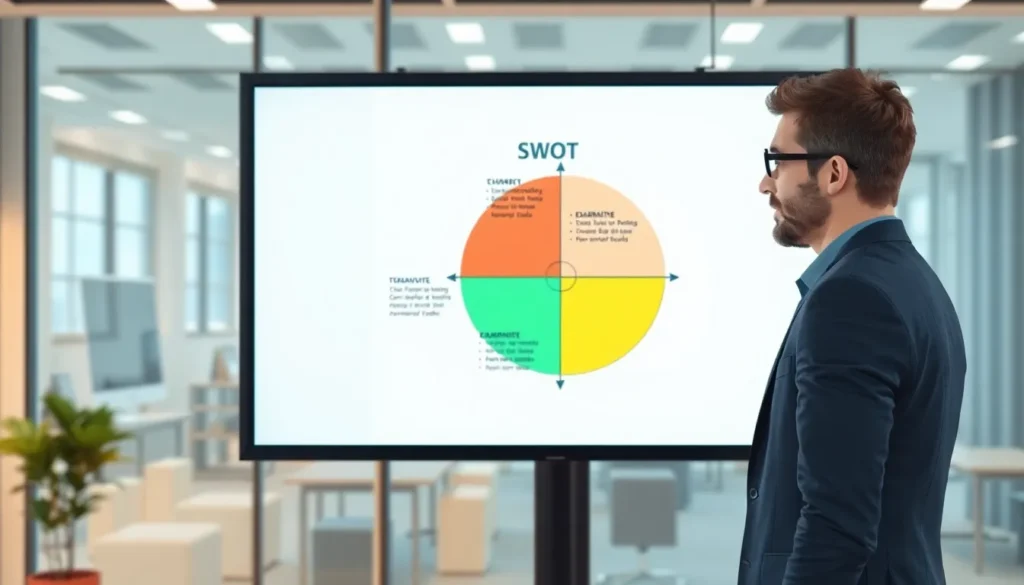
SWOT analysis consists of four critical components that provide businesses with a comprehensive understanding of their situation. Each element contributes unique insights necessary for informed decision-making.
Strengths
Strengths encompass the internal attributes that offer a competitive edge. A strong brand reputation establishes trust among customers. Exceptional customer service enhances customer loyalty. Unique product features differentiate offerings in the market. Additionally, robust financial resources allow for strategic investments. Identifying these strengths enables companies to capitalize on their advantages effectively.
Weaknesses
Weaknesses reflect internal factors that require attention. Limited resources might hinder operational efficiency. Skill gaps among employees can restrict growth potential. Dependence on a small client base poses risks, especially during market fluctuations. Recognizing these weaknesses provides businesses with opportunities for improvement and innovation.
Opportunities
Opportunities arise from external trends and changes that a business can leverage. Emerging market trends signal potential growth areas. Technological advancements offer ways to enhance productivity. Changes in consumer behavior can lead to new product demands. Exploiting these opportunities can significantly propel a company’s growth trajectory.
Threats
Threats are external challenges that could impact business operations negatively. Economic downturns may reduce consumer spending. Increased competition can erode market share. Regulatory changes introduce compliance challenges and costs. Identifying these threats enables companies to develop strategies to mitigate risks, securing their position in the market.
Importance of SWOT Analysis
SWOT analysis plays a crucial role in strategic planning for businesses. It offers clarity by revealing both internal strengths and weaknesses alongside external opportunities and threats. Identifying these elements helps organizations create actionable strategies.
Utilizing the insights from a SWOT analysis can lead to improved decision-making. Strengths guide businesses to capitalize on their advantages, like strong customer relationships or brand reputation. They can enhance competitive positioning by leveraging these capabilities.
Addressing weaknesses is equally important. By recognizing areas for improvement, such as skill gaps or resource limitations, businesses can implement targeted strategies to overcome these challenges. This proactive approach fosters growth and resilience.
Opportunities present avenues for expansion. Emerging market trends or technological advancements can enable organizations to capture new customers and enhance offerings. Exploring these opportunities ensures that businesses remain relevant in dynamic markets.
Threats pose risks that organizations must navigate. Economic downturns or increased competition can hinder growth if not addressed strategically. Understanding these threats allows companies to prepare and devise contingency plans.
The data gathered during a SWOT analysis process is invaluable. Feedback from stakeholders contributes to a comprehensive view of the organization’s position. Engaging multiple perspectives ensures all significant factors are considered.
Businesses of all sizes benefit from implementing SWOT analysis. Startups can establish a solid foundation, while established corporations can reassess their strategies in changing environments. This versatility reinforces its importance as a strategic tool, facilitating sustainable growth and adaptability.
How to Conduct a SWOT Analysis
Conducting a SWOT analysis involves several structured steps that provide clarity on a business’s internal and external environment. First, form a diverse team that includes individuals from various departments. This team brings different perspectives and insights, enhancing the overall analysis.
Next, identify strengths. Review assets like brand reputation, customer loyalty, and employee expertise. Document each strength clearly to establish a solid foundation for the analysis.
Identify weaknesses in the next phase. Analyze factors that limit success, such as lack of resources or specific skills. Gathering input from team members creates a comprehensive list of areas needing improvement.
Move on to opportunities by examining external factors. Consider market trends, technological advancements, and shifts in consumer behavior. These insights highlight potential avenues for growth and innovation.
Threats are equally important to assess. Monitor external challenges that could impede progress, including economic downturns and competitive pressures. A thorough analysis of these threats fosters proactive planning.
After gathering data for each category, organize the information into a four-quadrant matrix. This visual representation simplifies comparisons between strengths, weaknesses, opportunities, and threats.
Review findings collectively with the team to encourage discussion. Collaborative analysis leads to actionable strategies based on identified insights. Prioritize the strengths and opportunities that maximize potential while addressing weaknesses and threats effectively.
Implement the insights from the SWOT analysis into a strategic plan. Align goals with strengths and the opportunities identified. Regularly revisit the SWOT analysis, adjusting it as market conditions change or as the business evolves.
Common Mistakes in SWOT Analysis
SWOT analysis presents a valuable framework, yet common pitfalls can diminish its effectiveness. Overlooking stakeholder input stands out as a frequent mistake. Gathering perspectives from different team members enriches the analysis, enhancing its accuracy and comprehensiveness.
Focusing solely on immediate issues rather than long-term implications can lead to misguided strategies. Recognizing that both present opportunities and future threats matter ensures a more holistic view of organizational positioning.
Neglecting to update this analysis regularly creates risks, especially in dynamic markets. Revisiting the findings allows organizations to adapt strategies to reflect changing conditions, thereby maintaining relevance.
Creating vague or broad statements further complicates the analysis. Specificity in articulating strengths, weaknesses, opportunities, and threats enhances clarity and actionable insights.
Involving limited perspectives can cause a narrow understanding of the business environment. Cross-departmental collaboration broadens insights and fosters a comprehensive analysis, representing a variety of viewpoints.
Skipping the analysis of external threats can undermine proactive planning. Identifying potential challenges enables organizations to develop contingency strategies that mitigate risks.
Failing to operationalize findings is another critical error. Effective SWOT analysis translates insights into actionable strategies, aligning strengths with opportunities while addressing weaknesses and threats.
Lastly, ignoring the competitive landscape presents a significant oversight. Comprehensive analyses must include competitor positioning to provide context, making strategies more effective and relevant.
Each mistake presents an opportunity for improvement, emphasizing the need for a structured, inclusive approach.
SWOT analysis is an essential framework for businesses aiming to understand their position in a competitive landscape. By systematically evaluating strengths weaknesses opportunities and threats organizations can make informed decisions that drive growth and resilience. This tool not only aids in strategic planning but also fosters collaboration among teams ensuring diverse insights are considered. Regularly revisiting the SWOT analysis keeps businesses agile and prepared for market changes. Embracing this process empowers companies to leverage their unique advantages while addressing potential challenges effectively. Ultimately a well-executed SWOT analysis can be the key to sustainable success in today’s dynamic business environment.