

Navigating the world of border trade compliance can feel like trying to solve a Rubik’s Cube blindfolded. With regulations shifting faster than a cat on a hot tin roof, businesses often find themselves tangled in a web of paperwork and red tape. But fear not! Understanding the ins and outs of compliance doesn’t have to be a Herculean task.
Understanding Border Trade Compliance
Navigating border trade compliance involves grasping specific regulations and standards that govern international trade. This knowledge proves essential for businesses seeking to operate across borders smoothly and efficiently.
Definition and Importance
Border trade compliance refers to the adherence to various legal requirements when importing and exporting goods. Understanding this concept helps businesses mitigate risks linked to regulatory violations. Compliance not only avoids penalties but also facilitates seamless transactions across international borders. Ensuring adherence maintains customer confidence and strengthens a company’s reputation in foreign markets. Focusing on compliance can transform operations, leading to more efficient supply chains.
Key Regulations and Standards
Multiple regulations govern border trade compliance. The Customs Modernization Act emphasizes the responsibility of importers to understand customs laws. The Trade Act of 2002 mandates compliance with safety standards for imported products. International standards, like those set by the World Trade Organization, additionally influence trade practices. The Import Export Code requires businesses to register accurately and adhere to labeling requirements. Various agencies, such as the U.S. Customs and Border Protection, enforce these regulations to ensure lawful trade practices. Complying with these standards enables businesses to navigate border trade confidently.
Challenges in Border Trade Compliance
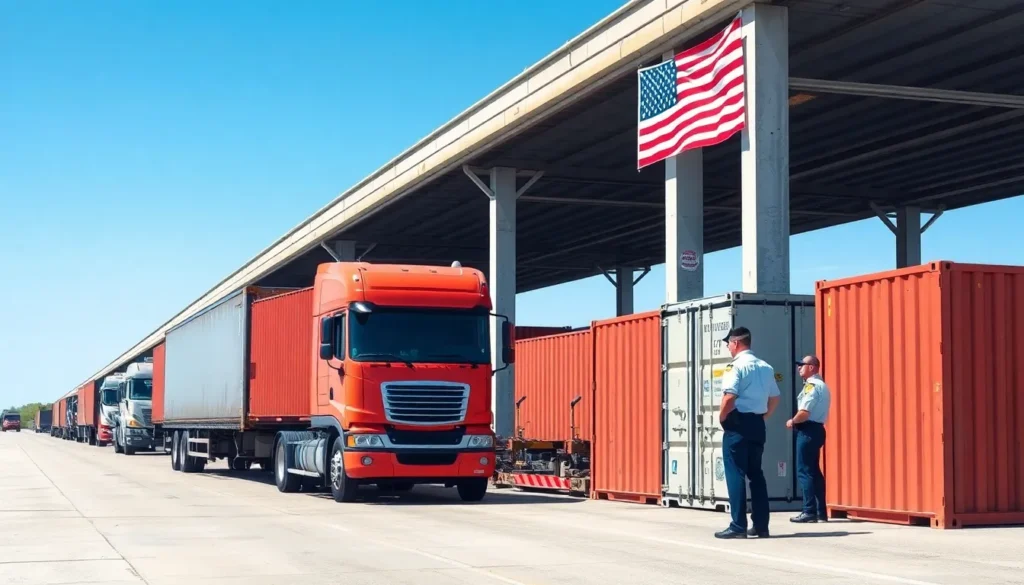
Navigating border trade compliance presents several challenges that businesses must address. Keeping pace with changing regulations proves especially difficult, often leading to confusion and unintended errors.
Common Compliance Issues
Compliance issues frequently arise from lacking knowledge about specific regulations. Misclassification of goods remains a common problem, with incorrect tariff codes leading to costly penalties. Delays in documentation submission also contribute to delays in shipments. Furthermore, inadequate record-keeping causes difficulties during audits, creating additional compliance burdens.
Impact of Non-Compliance
Non-compliance can lead to severe consequences for businesses. Companies may face substantial financial penalties, which can impact their profitability. Additionally, delays caused by compliance failures can erode customer trust and damage reputations. Importers and exporters risk losing access to key markets due to repeated violations. Legal repercussions may also emerge, creating further complications for operations.
Best Practices for Border Trade Compliance
Achieving compliance in border trade requires a proactive approach to specific strategies and the right tools. These practices ensure smooth international operations while managing the associated risks.
Effective Risk Management Strategies
Identifying risks early helps in implementing effective measures. Businesses should regularly assess their compliance framework and update risk assessments based on evolving regulations. In addition, training employees on these regulations ensures awareness and adherence. Conducting audits at regular intervals allows identification of potential non-compliance areas, enabling corrective actions before issues arise. Organizations find it beneficial to tailor strategies according to specific industry challenges. Utilizing a risk matrix aids in prioritizing compliance efforts, providing a visual representation of potential impact versus likelihood.
Tools and Technologies for Compliance
Leveraging technology streamlines compliance efforts and enhances efficiency. Software solutions like compliance management systems can automate reporting processes, reducing manual errors. Additionally, data analytics tools help monitor trade activities and identify anomalies in real-time. Electronic document management solutions simplify record-keeping, ensuring quick access to necessary documentation. Furthermore, communication platforms facilitate collaboration among teams, improving response times to regulatory changes. Companies that invest in these technologies often notice a substantial decrease in compliance-related issues, fostering a stronger reputation in global trade.
The Future of Border Trade Compliance
Border trade compliance evolves rapidly, influenced by regulatory changes and technological advancements. Companies must stay attuned to these developments to maintain competitive advantages.
Emerging Trends and Developments
Global trade agreements shape the landscape of compliance. As countries negotiate new deals, businesses face varying standards and requirements. Increased emphasis on sustainability prompts regulations focused on environmental responsibility. Additionally, several nations are adopting digital trade frameworks, facilitating faster and more transparent transactions. Cross-border data flows become crucial, requiring organizations to navigate data protection laws effectively. Understanding these trends positions companies to capitalize on emerging opportunities in international markets.
Role of Technology in Enhancing Compliance
Technology plays a vital role in enhancing compliance efforts. Compliance management systems streamline processes by automating documentation and reducing manual errors. Data analytics tools provide valuable insights, helping identify compliance risks and improving decision-making. Cloud-based solutions allow real-time sharing of information across teams, promoting collaboration and ensuring up-to-date compliance practices. Furthermore, artificial intelligence helps analyze regulatory changes, quickly adapting business operations to meet new requirements. Investing in technology not only fosters compliance but also enhances overall operational efficiency.
Navigating border trade compliance is essential for businesses aiming to thrive in international markets. By understanding and adhering to regulations, companies can avoid penalties and foster trust with customers. Embracing technology and proactive strategies not only streamlines compliance efforts but also enhances operational efficiency.
As the landscape of border trade compliance continues to evolve, staying informed about regulatory changes and emerging trends will be crucial. Companies that invest in compliance management systems and employee training are better positioned to adapt and seize new opportunities. Ultimately, a strong commitment to compliance will pave the way for success in global trade.